Syria one year after Assad: Jolani’s makeover, minority panic, and Israeli strikes

TEHRAN – On December 8, 2024, Syria entered a new phase when Damascus fell, and the Ba'ath Party’s long rule ended. Bashar al-Assad departed for Russia, where he was granted asylum. For many Syrians, Assad’s exit was neither a moment of triumph nor defeat, but the beginning of a new uncertainty. The vacuum left behind opened the door for forces both domestic and foreign to shape Syria’s trajectory.
Sharaa’s pledge
In January, Ahmed al-Sharaa -better known as Abu Mohammed al-Jolani, former leader of Hayat Tahrir al Sham (HTS)—was appointed transitional president. His nom de guerre reflected his family’s roots in the Golan Heights, annexed by Israel after the 1967 war. On the first anniversary of Assad’s departure, Sharaa appeared at the Umayyad Mosque in Damascus, dressed in a military uniform, to perform the dawn prayer. His speech promised to rebuild Syria “from its north to its south and from its east to its west,” projecting confidence and determination. Yet the symbolism of a former militant commander leading prayers in Damascus underscored the paradox of Syria’s new leadership: a man once hunted as a terrorist now claiming the mantle of national renewal.
Human rights concerns
The United Nations human rights office has expressed concern about the slow pace of justice under the interim authorities. Reports over the past year indicate killings, arbitrary detentions, sexual violence, destruction of homes, and restrictions on freedoms. Minority communities—Alawite, Druze, Christian, and Bedouin—have been particularly affected, with rising hate speech fueling tensions. The massacres last March in Alawite areas, where UN investigators reported around 1,400 deaths, remain a stark reminder of how fragile Syria’s social fabric has become. Analysts warn that unless the interim government establishes credible mechanisms of justice, sectarian wounds will deepen, creating fertile ground for renewed insurgency.
Israel’s expansion
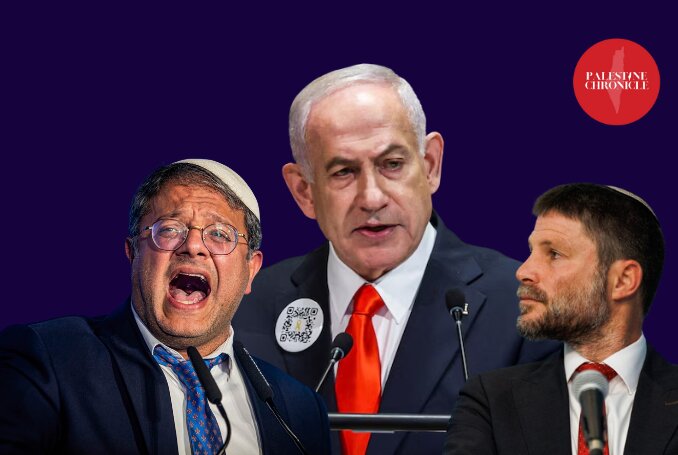
Israel has taken advantage of Syria’s weakened state to expand its occupation. Following Assad’s fall, Israel declared the 1974 disengagement agreement void and moved into the buffer zone, establishing checkpoints and detaining Syrian citizens. It has expanded its control by roughly 400 square kilometers while intensifying air strikes, including in Damascus. The Beit Jinn attack last month, which killed 13 people, was condemned by Syria as a “full-fledged war crime.” The Arab League described Israel’s actions as a “flagrant” violation of international law.
This expansion is not accidental. Prime Minister Benjamin Netanyahu has invoked the idea of a “Greater Israel,” framing territorial control as both a historic mission and a security necessity. In a 2025 speech, Netanyahu declared: “The land of Israel is not just our present, it is our destiny. We will never return the Golan Heights, nor will we surrender our right to defend our people by holding the territories necessary for our security.” Far-right ministers in his coalition have gone further. Finance Minister Bezalel Smotrich stated, “The dream of Greater Israel is not a slogan, it is our duty. Syria’s weakness is our opportunity to secure our borders permanently.” National Security Minister Itamar Ben Gvir echoed this, saying: “The disengagement agreements are dead. Israel must extend sovereignty wherever its security requires, including in Syria.”
Such rhetoric, once dismissed as fringe, now shapes policy. Analysts note that Israel’s moves in Syria mirror its long-term strategy in Palestine: normalize occupation through incremental expansion, backed by military superiority and justified by security narratives. If Syria remains fractured, Israel’s territorial advances may become irreversible.
Western double standards
The rebranding of al-Sharaa, once pursued as an Al Qaeda militant with a multimillion-dollar US bounty, into a head of state honored at the White House, exposes the extraordinary double standards of Western policy. Less than a year ago, he was a wanted man; today, he is received by world leaders, including Donald Trump, who praised him as “a man who has given Syria hope.” Within weeks of taking power, senior American diplomats arrived in Damascus, the bounty was scrapped, and sanctions began to ease. The Caesar Act, once the harshest measure against Assad’s Syria, has been suspended and could be repealed.
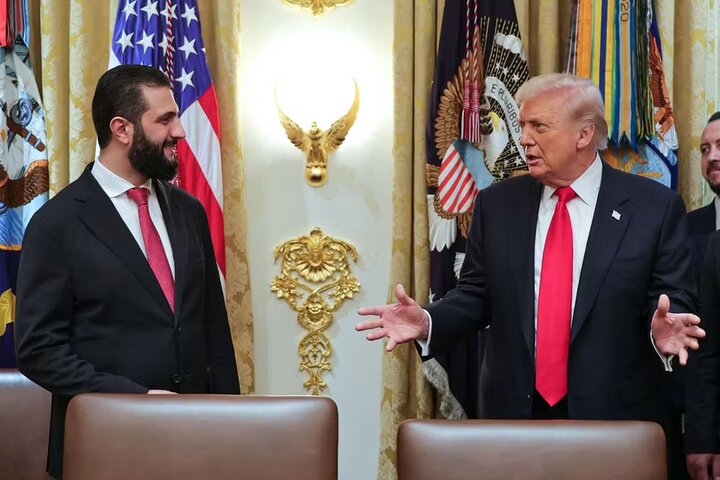
Syria's leader Ahmed al-Sharaa (L) meeting with US President Donald Trump at the White House in Washington DC. In November. Photo: AFP
This transformation is widely seen as a deliberate whitewashing of Jolani’s past. Western governments, which once condemned him as a terrorist, now present him as a legitimate statesman. Media outlets have played their part in this rebranding: CNN described him as a “blazer-wearing revolutionary,” The Washington Post portrayed him as pragmatic and charismatic, and The Daily Telegraph even suggested he could build a Syria respectful of minority rights. Critics, however, warn that this is a dangerous illusion. Human rights groups such as Christian Solidarity International have accused Western diplomats of “working at breakneck speed in Damascus to rehabilitate Syria’s new Sunni jihadist dictator,” despite his designation as a terrorist by both the US State Department and the UN Security Council.
Analysts argue this is a textbook case of Western double standards: yesterday’s “terrorist” becomes today’s “partner” if he can deliver stability, intelligence cooperation, or align against Iran. As author Dan Kovalik bluntly put it, “US and NATO are whitewashing their terrorist proxies as the new government.” The West’s willingness to erase Jolani’s record underscores a pattern of expediency, where principles are sacrificed for geopolitical convenience.
Militant backlash
For militant hardliners, Sharaa’s embrace by the West is proof of betrayal. They accuse him of selling out his religion and history. ISIL, also known as ISIS or Daesh, channels monitored by the BBC continue to tell Syrian Sunnis that al-Sharaa has betrayed them, claiming he has long been an agent of the US and UK. These narratives aim to fracture Sunni support for the interim government and push fighters back toward militancy. Analysts warn that if sectarian violence flares again, Israel stands to benefit strategically. A fractured Syria cannot rebuild its army or contest Israeli positions in the Golan Heights. In such a scenario, Israel can continue its strikes, expand its ground presence, and normalize its occupation under the guise of security.
Syria’s uncertain future
The future of Syria remains deeply uncertain. Sharaa’s overtures to the West have brought him international recognition, but legitimacy abroad does not guarantee stability at home. Minority communities remain vulnerable, sectarian wounds are fresh, and hardline groups are eager to exploit grievances. Meanwhile, Israel’s expansion and far-right ambitions threaten to redraw Syria’s borders in practice, if not in law. Analysts predict that unless Syria consolidates state authority and addresses sectarian grievances, the country risks becoming a permanent battleground for foreign agendas. The coming year may test whether Sharaa’s government can survive, or whether Syria will remain caught between the West’s so-called pragmatism, Israeli expansionism, and militant resurgence.
Leave a Comment